+8613706519013
 BHC Polymer Additives Co., Ltd / Shanghai Crystal Wells Chemical New Materials Co., Ltd.


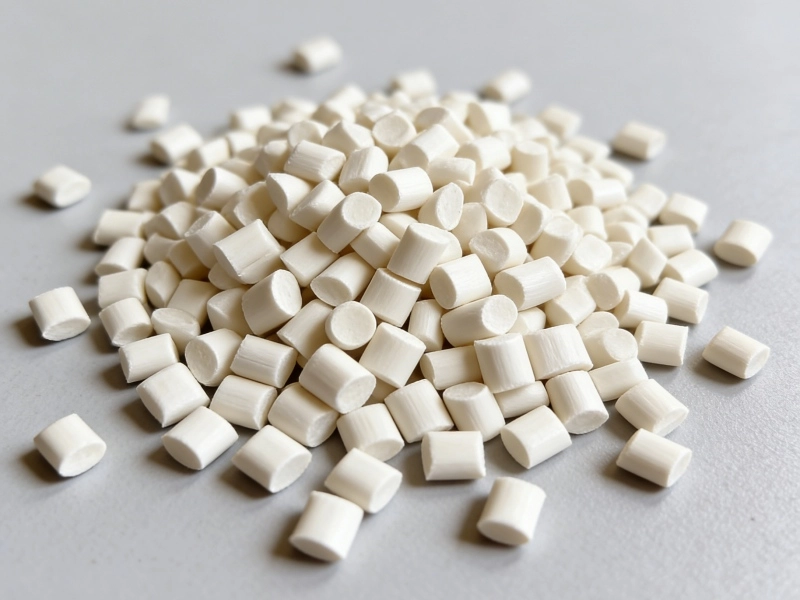
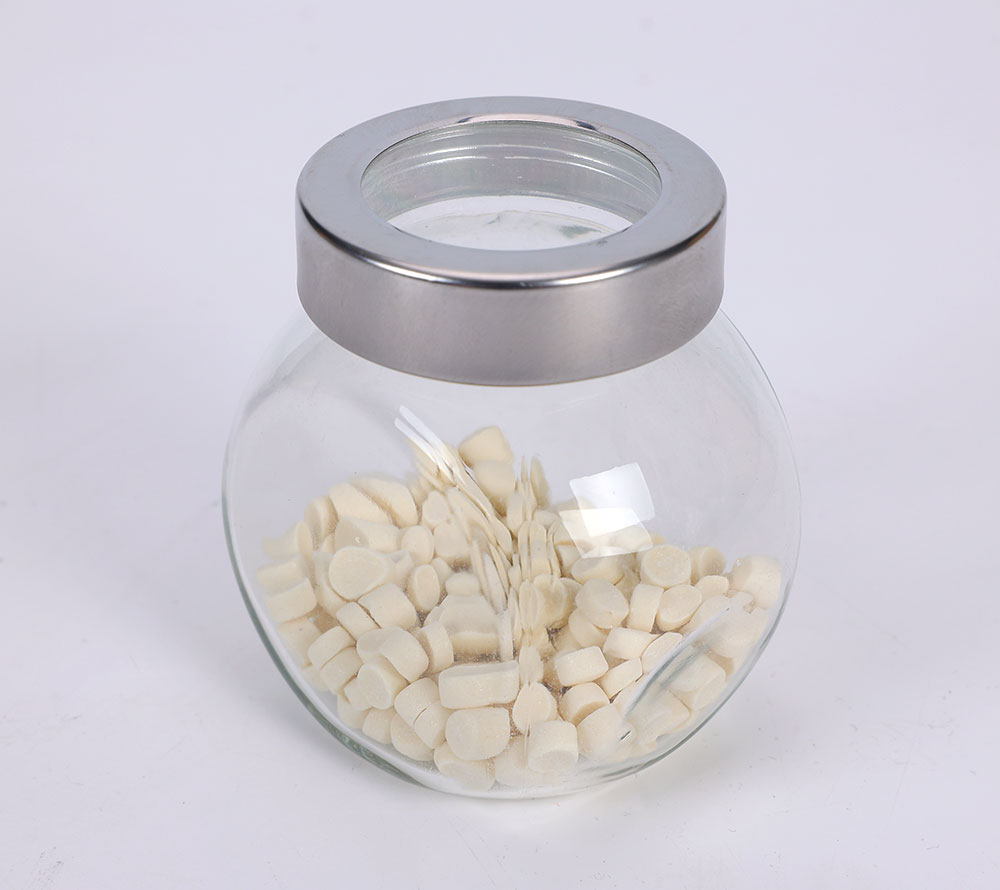
NOBS-80 is a predispersed sulfenamide accelerator masterbatch widely used in tire tread compounds, conveyor belts, hoses, seals, and other technical rubber products. As an 80% active polymer-bound form of N-oxydiethylene-2-benzothiazole sulfenamide (NOBS), it delivers controlled reactivity together with improved dispersion and processing safety.
Understanding the mechanism of NOBS-80 accelerator is essential for compound engineers who aim to balance scorch safety, cure rate, crosslink structure, and long-term mechanical performance. Its behavior in sulfur vulcanization systems is governed by staged chemical activation, delayed intermediate formation, and regulated sulfur transfer reactions. The following sections provide a detailed and technically accurate explanation of how this accelerator functions at the molecular and kinetic levels.
Chemical Activation and Thermal Decomposition Pathway of NOBS
NOBS belongs to the sulfenamide class of delayed-action accelerators, which are characterized by their thermally activated sulfenamide linkage. The molecule contains a benzothiazole ring connected through a sulfur–nitrogen bond to an oxydiethylene substituent. This structural arrangement is crucial to its controlled reactivity.
At typical rubber processing temperatures, usually between 110°C and 130°C, the sulfenamide bond remains relatively stable. As the compound reaches vulcanization temperature, generally in the range of 140–170°C, thermal energy initiates cleavage of the S–N bond. This decomposition does not occur instantaneously; instead, it proceeds through formation of benzothiazole-derived reactive intermediates.
In the presence of zinc oxide and stearic acid, which form the classical activator system in sulfur curing, these intermediates are converted into active sulfurating complexes. These complexes react with elemental sulfur to produce reactive sulfur chains capable of bonding with the polymer backbone. Because this activation pathway requires both sufficient temperature and activator interaction, NOBS exhibits controlled onset of crosslink formation rather than immediate reactivity.
This staged thermal decomposition pathway forms the chemical basis for the delayed-action performance of NOBS-80 in rubber vulcanization chemistry.
Mechanism of Delayed-Action Behavior and Scorch Safety
One of the most valuable properties of NOBS-80 is its excellent scorch safety. In rubber processing operations such as internal mixing, extrusion, and calendaring, premature crosslinking can lead to viscosity increase, poor surface finish, and scrap generation. Therefore, a predictable induction period is essential.
The delayed-action behavior of NOBS originates from the stability of its sulfenamide structure at processing temperatures. During mixing, the concentration of active sulfurating species remains very low because the rate of sulfenamide bond cleavage is limited. As a result, crosslink precursors are not formed in significant amounts, and the compound maintains processing stability.
When the temperature rises to the vulcanization range, decomposition accelerates and the concentration of reactive intermediates increases sharply. This transition creates a well-defined induction period followed by a relatively rapid cure phase. The separation between processing window and curing window allows manufacturers to operate with greater safety margins.
Compared with faster accelerators, NOBS provides longer scorch time and reduced risk of localized pre-curing, particularly in thick or highly filled compounds. This characteristic makes it especially suitable for tire tread formulations and large industrial rubber components where uniform heat penetration is critical.
Kinetic Influence on Cure Rate and Induction Period
The cure kinetics of NOBS-80 can be quantified through rheometric analysis such as Moving Die Rheometer (MDR) testing. Parameters such as scorch time, optimum cure time (T90), and cure rate index reflect how the accelerator controls the sulfur crosslinking reaction.
Mechanistically, NOBS exhibits moderate induction followed by efficient acceleration once active complexes accumulate. The initial reaction rate constant remains relatively low, preserving processing safety. After reaching a critical concentration of reactive species, sulfur transfer to polymer chains increases significantly, producing a steep torque rise on the cure curve.
This kinetic profile results in balanced cure characteristics. The induction period is sufficiently long to prevent premature vulcanization, while the subsequent cure phase proceeds efficiently enough to maintain industrial productivity. The controlled rate of crosslink formation contributes to more uniform crosslink density throughout the rubber matrix, reducing internal stress gradients and improving dimensional stability.
For tire compounds, such kinetic balance directly affects tread performance, heat buildup behavior, and long-term durability. Proper optimization of sulfur level and accelerator loading enables fine adjustment of T90 without compromising scorch safety.
Crosslink Network Formation and Sulfur Bond Distribution
The mechanical performance of vulcanized rubber is determined not only by crosslink density but also by the type of sulfur bonds formed within the network. NOBS-80, when used in conventional sulfur curing systems, tends to promote formation of polysulfidic crosslinks along with a proportion of disulfidic linkages.
Polysulfidic bridges provide high elasticity and superior dynamic fatigue resistance, properties that are essential in applications subjected to cyclic deformation such as tire treads and vibration-damping components. These longer sulfur chains allow reversible deformation under stress, contributing to improved crack growth resistance.
However, polysulfidic bonds possess lower thermal stability compared with monosulfidic linkages. By adjusting the sulfur-to-accelerator ratio or adopting semi-efficient and efficient vulcanization systems, compound engineers can shift the crosslink distribution toward shorter sulfur bridges. This adjustment improves heat aging resistance and reduces reversion at elevated temperatures.
The mechanism by which NOBS influences sulfur bond distribution is closely linked to its rate of sulfurating intermediate formation. Because sulfur transfer occurs in a regulated manner, the resulting crosslink network is typically well-balanced, combining flexibility with adequate thermal stability for demanding industrial conditions.
Synergistic Mechanism in Binary Accelerator Systems
In industrial rubber compounding, NOBS-80 is frequently combined with secondary accelerators to optimize cure performance. When paired with thiuram accelerators such as TMTD, the system benefits from enhanced sulfur donor activity while maintaining delayed-action characteristics. The thiuram component contributes additional reactive sulfur species, increasing cure rate, while NOBS continues to regulate induction time.
When used with guanidine accelerators such as DPG, activation efficiency is improved through enhanced formation of zinc complexes. This interaction increases the effectiveness of the sulfenamide-derived intermediates and modifies the overall reaction pathway.
The synergistic mechanism in binary accelerator systems involves overlapping reaction routes that increase the concentration of sulfurating agents without eliminating scorch safety. Through careful adjustment of accelerator ratios, compounders can tailor modulus development, optimize cure speed, and control crosslink type distribution.
Such flexibility is critical in modern tire engineering, where rolling resistance, wet traction, wear resistance, and heat buildup must be simultaneously optimized. NOBS-80 plays a central role in achieving this balance due to its controlled activation chemistry and compatibility with complementary accelerators.